From practice
Iran Tomorrow: The Work that Has to Happen Before the Door Ever Opens
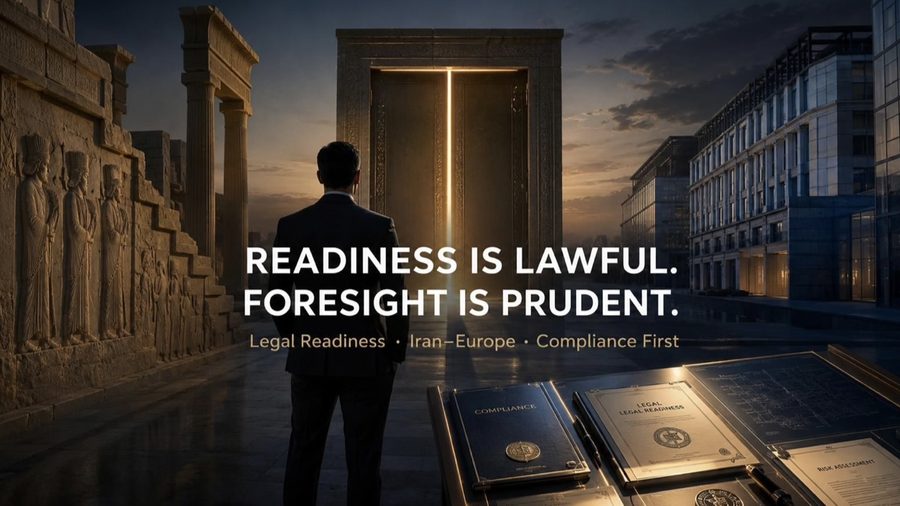
Let me be clear from the first line: this is neither a prediction nor an invitation. Sanctions are real, they bind today, and they must be respected in full. Nothing here suggests otherwise. But thinking one step ahead — quietly, and strictly within the rules — is not a loophole. It is the job.
So sit with one question. If the barriers around Iran were ever to ease, who would actually be positioned to act — and who would lose the first two years just proving what they own?
History has already answered this
Every time a closed market rejoins the global economy, the same thing happens. The first wave is loud, fast, and mostly wasted — because the legal foundation isn't there. Ownership can't be verified. Titles are contested. There is no source-of-funds trail a bank will accept. The money that finally moves is never the fastest. It is the best prepared. Speed makes headlines; preparation makes deals.
Readiness is not action — and the difference is the whole point
This is where people get it dangerously wrong. Preparing legally for a possible future is not the same as transacting now. One is prudence. The other, today, is a violation. Readiness is not doing the deal early — it is understanding, in advance, exactly how ownership, inheritance, corporate structure, and compliance would function, so that if the day ever comes, you build on rock instead of scrambling on sand while others race past you.
What "prepared" actually means
It is deliberately unglamorous. Clean proof of what is owned, and by whom. Succession that already holds across two legal systems. A clear read on which structures survive scrutiny and which quietly collapse. And above everything, a compliance-first posture — because any future opening will do exactly what the present does: reward transparency, and punish the shortcut. The rules will not get looser. The prepared will simply be ready to meet them.
Why this is a legal question, not a political one
I take no position on whether or when anything changes. That is neither my field nor my place. My field is narrower, and far more durable: making sure that whatever the future holds, a family or a business stays legally coherent across every system it touches. That work pays off in any political weather — because clarity, once built, is never wasted and never wrong.
The families and businesses who navigate a future opening well will not be the ones who moved first. They will be the ones who understood — early, and calmly — that the real barrier was never speed. It was preparation.
Readiness is lawful. Foresight is prudent. And clarity, in any climate, is never premature.
##IranianLaw Compliance CrossBorder LegalReadiness ARIKEH